

Not Sure What Your Angle Is Here

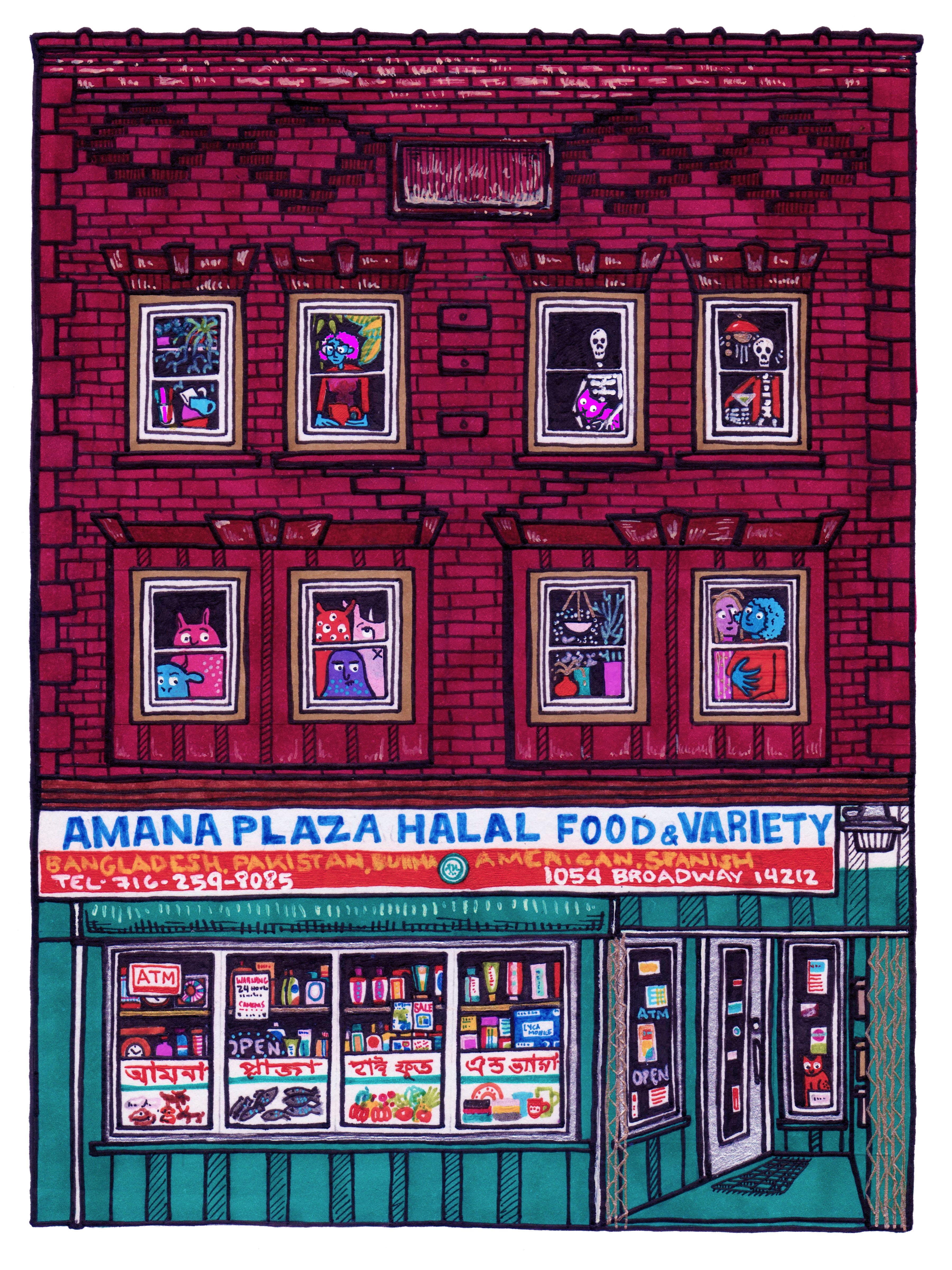
Some memories hit you like lightning bolts. They may be repressed for years, sometimes entire decades, but a smell, a stranger on the sidewalk, or the facade of a building makes a forgotten vision from the past appear with renewed vigor and clarity.
There is a building in my Philadelphia neighborhood that is the spitting image of my old high school. A gigantic new deal-era architectural marvel that once housed a vocational school with eight floors and three sets of expansive staircases, featuring the type of hallways that immediately take me back to being 14 again. I can place myself inside its thick brick walls and cosplay as my younger self, even though the building has now been repurposed as a gentrified yuppie hangout.
The machine shop on the first floor is now a trendy bakery that The New York Times has christened one of the “best bakeries in the country” (and I can attest that the croissants are very good). There are yoga studios and artist galleries, a fancy plant shop, a hair salon, and a cooler-than-thou rooftop bar with one of the best views in the entire city. It has become a destination for people outside of the neighborhood; there are weddings and large events in the auditorium, concerts, film festivals, flea markets, and more.
The surrounding neighborhood is still heavily Central American, Southeast Asian, and working-class Italian, peppered with bodegas, Cambodian corner stores, hole-in-the-wall boxing gyms, and auto body shops. Sometimes, if I ignore the new population of occupants inside the structure, I can walk the perimeter of the building and pretend I am back in high school walking from the bus stop to first period.
My last couple of essays have focused a great deal on this awkward period of my life. And I want to emphasize I don’t miss it, nor am I nostalgic for it, but the older I get, the more I realize how this season of time has made me unique, and also has made me somewhat of a forever outsider.
Ashkenazi Jews in North America have been classified as “white” for several generations now. “White” is really a catchall phrase for economically comfortable, socially successful, and represented in mainstream culture. Italians, Irish, and Poles were, at one point, not “white”; now they encompass a large proportion of this “white” community, which has recently added Ashkenazi Jews as an addition. The issue is–this label isn’t real, as the Jews are included when convenient and excluded when it’s not. Just get a antizionist leftist to debate a neo-Nazi about Jewish genetics and watch the mental gymnastics of fools–Jewish “whiteness” may be the only thing the two flavors of Jew hatred disagree on.
The older I get, the more I resent this label. Not because I want to distance myself from “whiteness” and whatever whiteness really means, which honestly isn’t real either–race is, after all, a social construct. But I have issues with the designation because of the assumptions and gravity of this label that has been placed on me and my memories without my consent.
I also think in a lot of ways growing up I unconsciously “wanted” to be white–not that that’s the correct label either, more so I couldn’t understand why my frizzy Jewish hair couldn’t be combed into straight submission, or why being called “Anne Frank” bothered me so much–and it wasn’t because she was a 13 year old who died in the concentration camps, it was because of her thick eyebrows, pointed angular nose and sharp features. Anne looked like a Jew and not a Gentile–I look like a Jew and not a Gentile. For teenage Julia, looking Jewish = ugly.
In addition, I didn’t grow up around many Jews. I did not have close childhood Jewish friends. The closest I got was a half-Israeli girl who lived in a mega mansion and a pair of brothers who lived out in the exurbs and had the best Playmobile collection in the 716 area code. The brothers who were forced on me by my parents, who were friends with their parents, were so orthodox and sheltered that to me, as a secular Jew, playing with them was like speaking another language. The half-Israeli girl liked to remind me that I went to a crummier school than hers and that my grades were worth less. Needless to say, neither friendship was long-lasting.
I did not attend synagogue. I never had a Bat Mitzvah. I still, to this day, cannot recite anything in Hebrew. There was a time when I was actually proud of my ignorance, which my family (who I love very much) has also played a part in cultivating–not that it’s entirely their fault either, Jewish trauma manifests in strange ways. The Holocaust and European Jewish refugees that I have mentioned raised me, and whose houses I frequented as a little girl, were all very conservative about any outward displays of their Jewishness. They had the accents and the memories they carried with them, but the horrors of World War Two were too much to bear. Most were atheists, and many did not practice Jewish traditions. I guess you could say I almost grew up like a Soviet Jew–just in the USA and not the USSR.
But what has really set me apart is that my upbringing doesn’t fit nicely into the stereotype box–although I guess it’s debatable if anyone’s childhood is an all-encompassing conception of one’s racial background, social class, and ethnic makeup. This is one of the reasons intersectionality doesn’t really work—because categorizing people based on immutable markers and life circumstances out of their control ends up making you exactly the thing you are trying to avoid by applying the labels, the oppression hierarchies, and the societal prognosis–a classist, racist, bigot.
Where does all of this fit in with me exactly? I am not oppressed–because I choose not to see myself that way, and I don’t have the desire to be pitied or finagle my way into another racial categorization based on my ethnic minority status. Being a Jew who grew up in a heavily segregated city with real systemic race issues just makes this all more complicated. Being a Jew, reacting to one of the worst racist terrorist attacks in that city in modern memory, from 6000 miles away on the opposite end of the country, also makes this more complicated, because Jews cannot be easily categorized–especially those who grew up outside of the traditional “Jewish community.”
Some memories hit you like lightning bolts.
May 14th, 2022, was one of those days. Where a memory, rude and uninvited, nasty and painful, broke through in public and with a person whose vision of who I was didn’t fit with who I actually am on the inside, based on my life experiences.
“I thought you grew up in the suburbs.” Huh? Right. Rowan1* didn’t understand. She was from rural Western Washington. One of those “nice white people” who had the right political positions, the right slogans, the correct social media posts about race, race relations, and geopolitical issues. She was accompanying me on an hour-long walk around Seattle, the kind of walk I usually did solo on the weekends, where I would trek up and down hills snapping photos of graffiti, random street signs, vistas, lakes, and fun architecture. We had ducked into a Columbia City cafe for a coffee when our old boss had texted me.
“Thinking of you.” How odd–I texted Kiana2* back immediately, “About what?” I replied. Kiana texted back: “Did you see the news? About Buffalo? There is a mass shooting.”
I googled, and then I saw it–the news headline. The shooter was still inside the supermarket on Jefferson, located on the deep East Side of the city. It was a Saturday, mid afternoon east coast time, prime time to bring a semi-automatic rifle to a Tops Friendly Market and murder as many African Americans as you could at a grocery store that served the poorest demographic in one of the poorest cities in the nation. I knew that Tops. I had been there. I had been dragged there by my mom on one or more occasions or by friends who had bought eggs, milk, the occasional loaf of bread, and I had passed by it on the bus to and from shitty minimum wage jobs and school events.
The dust hadn’t settled yet, the news was still coming in, 7 people shot, then 8, then 10…the identity of the perpetrator was still unknown, and I kept refreshing my newsfeed. Rowan looked over at me, perplexed: “Is everything ok?”
“No. There has been a mass shooting on the East Side of Buffalo, and it’s either gang-related or a white supremacist.”
Her eyes widened–but she was intrigued, that was when she made the statement about where she thought I was from, where she assumed I had grown up. She was clearly confused–just like most nice white lefty Seattleites were confused about a person like me. Because who I was supposed to be did not live up to the expectations of who I actually was.
Back in the coffee shop on a sunny May day in south Seattle, my former friend and coworker watched me emotionally spiral. Rowan, to her credit, did appear concerned; the issue was that my racial categorization and perceived privileged status made my grief seem performative, especially in a city like Seattle. Seattle is a city that prides itself on its openness and tolerance. It is a place where political identity usurps cultural affinity, and where one must atone for one’s perceived racial sins if you fail the manila envelope test.
I always flinch when I see a viral video or photograph of a gender bending, angry white woman with a terrible haircut screaming into the camera, rage-baited for the sole purpose of entertainment and mockery, and peer into the corner of the video and realize they are standing on the intersection of Broadway and Pike. Unfortunately, this corner and this type of person have become their own internet stereotypes, breaking free of Seattle and occupying a special space in the feeds of right-wing trolls and MAGA influencers. And another unfortunate reality is that the white woman crashing out on the Seattle corner at a protest or at the sight of a Evangelical Christian with a “Jesus Saves” sign is also a very real city-wide phenomenon.
She/They exists: pronoun pins, mullet haircut “smash racism” t-shirts, and all. She/They thinks She/They is more empathetic and more enlightened, and less bigoted than her parents. The reality is, many of these people do mean well–but they slowly transform into an inverted mirror of what they want to be and what they represent. The anti-racists slowly become consumed by their anti-racist narratives and flatten themselves into a version of themselves that fits with their thought-terminating chants and social justice racial slogans. In essence, they stop living as a full person and morph into a cliche, turning themselves into walking, talking racial stereotypes.
Rowan was a woman who dressed alternately and sometimes called herself “queer.” I recall the moment in passing I mentioned I was bisexual, which induced a mini struggle session as Rowan chastised me for not confessing this detail to her earlier. I eventually managed to admit that I really didn’t care all that much, I mean, I was in a long-term relationship with a man, one with a penis, to which she immediately shot back that not caring about my sexuality was “bi-erasure.” I find this detail interesting because Rowan seemed to care more about this trivial detail about my supposed sexual preferences that I still don’t care much about myself than where I was from–a far more consequential part of my life and world view. Meanwhile, I was genuinely fascinated with where Rowan was from–rural Western Washington, a culture that was completely foreign to me.
Sporting an armful of tattoos, she was a person who regularly shopped at the goth store on Capitol Hill, but her real identity was her political affiliations, her affinity for socialist politician Kshama Sawant, her support of “Black Lives Matter,” her performative posts advocating for Palestinian Liberation–those were the social signifiers she cared most about conveying to the world at large. Which was also intriguing, because Rowan was not upper-class. Rowan grew up with an alcoholic father who passed away while she was young, and is from a small rural town deep in the mountains and isolated in many ways from the comforts of the more developed areas of the state.
But there are lots of Rowans residing in Seattle. Nice white people from rural Washington, Idaho, Oregon, Montana, and Wyoming who are deeply embarrassed and ashamed of their past lives–who grew up under circumstances they couldn’t control but compensated for their monochromatically racial childhoods by diving face-first into progressive politics to repent for their past sins. The problem was, they assumed that everyone who looked like them also came from similar backgrounds–and by extension had the same world views.
I probably sound bitter, and I admit I am making claims that sound sweeping and generalizing–and there is a kernel of truth in both these statements. I am a bit bitter about how Rowan and I “broke up,” and I am still wounded by a city that I have compared in a previous essay to a “first love.” But I also lived in Seattle for close to seven years. I know her and her people well, so I think I am allowed some grace in my characterizations–a permission structure that was not granted to me in return.
The Buffalo mass shooting at a grocery store in the blackest, poorest neighborhood in my home city–and my raw, unfiltered emotional reaction to it threw a wrench in who I was supposed to be. I got home from my walk with Rowan, dazed, confused, and broken, and opened myself up to the wrath of the internet. It’s important to note–and has been another subject of one of my earliest pieces of writing–that I had been drawing corner stores and bodegas in Buffalo for years, many of which are located in the same neighborhood as that Tops Friendly Market. The hours I spent posting that day are a blur, but I just remember I went crazy sharing my drawings of corner stores–those drawings were my proof that I was there, that I knew who the fuck I was, that I knew that neighborhood, that I knew what I was talking about and who I was talking to–or so I thought.
They caught the guy alive. His name was Payton Gendron, and he had streamed his murderous, hate-filled rampage live on the Amazon-owned streaming platform Twitch. Gendron had chosen his target carefully; a resident of downstate New York, he had researched what areas of the state outside of New York City had the most densely populated enclaves of Black Americans and zeroed in on the zip code 14208. He drove nearly 200 miles, over 3 hours of driving time, from Binghamton to Buffalo to execute his plan.
Originally, Gendron, who believed in the “Great Replacement” conspiracy theory, or the notion that Jews were intentionally and maliciously replacing the endemic white populations with minority communities, wanted to target a synagogue, which is the reason Gendron had chosen Saturday for his attack. But Gendron hated blacks as much as he hated Jews and realized a grocery store would be a far easier target. It appears to me that it was a flip of a coin, really, what community Gendron decided to “get got” that day–so Tops Friendly Market on Jefferson it was, the Jews of Buffalo were spared at the expense of the deep east side African American neighborhood. But Gendron probably also knew–there aren’t that many Jews in Buffalo to begin with, many of these enclaves had left the city altogether, and of those of us who had remained, we were splintered.
I grew up without knowing what I was, because I didn’t need to know; it wasn’t important. My first hardcore crush, that kind of obsessive “stalker-light” force that takes over a hormonal teenager’s brain, was a boy named Farquan Aljibouri. Farquan–whose name I’m butchering because with age and time, the only thing I can remember is how it sounds in my brain–was from Iraq. He was on our soccer team in that high school building, which mirrors the same building filled with artsy folks and yuppies that I live near now.
Every girl in my grade had a crush on Farquan; he was objectively gorgeous. While not tall, he had a face that looked almost exactly like Aladdin’s from the Disney Movie of the same name. In addition, he was one of the few decent soccer players we had at a school that was not known for producing sports stars. Farquan had younger sisters, both of whom were just as physically beautiful.
One of them–the sister in my grade, left home after high school and never returned. She lived in the same city, and I would see her around town, but her name was no longer what it had been prior, and she would not acknowledge any of her classmates–including me, not that we were ever close. Rumors spread that she had been disowned by her family, though to this day, I can’t verify any of the gossip that spread around town like wildfire. But I would see her again, years later, and right before I left Buffalo forever. She ended up living around the corner from me in a nondescript North Buffalo House, with a non-Arab partner and a dog. We would make eye contact occasionally from afar, but never acknowledge that we had peripherally known each other in a different life and under different names.
I had heard she left home because of the severe abuse she was subjected to because of her family’s orthodox Islamic beliefs–but again, these are just rumors. I never knew her or Farquan well enough to know anything about her parents, even if they had driven me home once. I had been trapped in a car with her dad, after a soccer game with no idea how to get home, and gruffly asking for my address, I now wonder with what I know now–about who I am, what genetic markers I contain, if he would have been cool driving me home knowing I was a Jew. Maybe it wouldn’t have mattered, but also maybe it would have.
I was one of two Jewish kids in my entire class of over 400 students in a high school of over 1300–maybe not large by New York City standards, but far larger than many of the schools my former Seattle friends and colleagues spent their youths in, and comparable to fitting in to the now abandoned school turned “arts center” that anchors the southern half of my South Philadelphia neighborhood.
My Jewishness was little more than a quirk, a facet of myself that I could point to as making me briefly interesting. Yes, I was surrounded by European Jewish refugees as a child at a young age, but so what? I had classmates from Zimbabwe, Iraq, Vietnam, Bosnia, and Yemen–out of everyone else I attended school with, I was “white” at least in the sense that my grandparents were the ones who fled a civilizational-defining war and not my parents. But who I am on the outside still masks all of this.
I want to cookouts, birthday parties, and later-post high school graduation house parties deep in neighborhoods in Buffalo that would make nice lefty white girls like Rowan, and in addition, the nice people who now occupy the old re-purposed high school in South Philly squirm. But it doesn’t matter, because my complexion is pale, my voice high pitched, my demeanor middle class “white girl” coded. But if you get enough drinks in me and put on the right music, I can easily start talking like Rick Hyde. And if you do know where I am from, that also makes a lot of sense–because I did go to school with Darius (Rick Hyde’s legal name) after all. Darius (who, if you ever read this [Darius]–I’d still love to do that album cover someday…) is from the very neighborhood where the May 14th, 2022, shooting took place.
Why am I sharing any of this? These discombobulated musings on people I once knew and lives once lived? Because that day in May over four years ago revealed who I am not, but who others who I thought knew me well perceived me to be, and unfortunately, probably still do. The version of you that exists in other people’s minds lives on, no matter how much narrative correcting you attempt to do. And in Rowan ’s mind, I will forever be an uppity suburban Jew, and this is also true of other friends I have been forced to drop in the last few years along the way, regardless of how much evidence I have to the contrary of this narrative.
You could explain that Jews are an ethnoreligious group that comes in all colors of the rainbow. You could explain that most Jews in Israel are from Middle Eastern countries they had to flee with the shirts on their backs to escape genocidal anti-Jewish violence perpetrated by people who were the same shades of black and brown as the minority community they were attacking. You could explain that Israel has two million Arabs living in the country with equal rights and representation, but as we know, 2.5 years after October 7th, not one of these factoids matters that much to those who want to flatten the narrative to make it easier to swallow.
Rowan was the kind of person who needed this narrative to be easier to swallow and royally dumped me as a friend almost exactly a month after the attack with a single Instagram message: “Not sure what your angle is here.” Which was in response to me sharing a Tomer Yosef song–an Israeli Jewish musician whose family fled Yemen.
In between May 14th, 2022, and October 7th, 2023, there were other cracks in our relationship I chose to ignore–because I really, really liked Rowan. I really valued her as a friend–but now years after our break-up I’m not sure she saw me as anything more than a token–a “Jew.” A curiosity, or an interesting accessory. There was another memory–this one more fuzzy than the rest, where Rowan chastised me at work for acting as if I spoke for “all Jews.” I think about this comment in passing now way more than I should–because at the time, and even to some extent now, I still don’t have a Jewish community; I just happen to know where I come from, even if I can’t speak a lick of Hebrew.
In the days after the May 14th attack, after we had all returned to work and had to go back to our business, I sent out a company-wide email about what had happened over the weekend. Was it dumb in retrospect? Yes, there was no reason to open myself up like that to coworkers whose impression of me didn’t change, and also didn’t need to be altered; however, I also did it to signal to Rowan and a few other friends in the office about where I was from. It felt important to let them know that they worked with someone impacted by one of the worst racially motivated hate crimes in over a decade–even if my insides did not match my outsides.
But here’s the thing about memories and “living that life” or whatever the expression is these days, memories are not clothes that you can take on or off or mix and match to create a new style–a new personality. You can try to repress them, to hide past experiences, to make yourself more palatable to different audiences, but eventually, if you try to force it down, the memories bubble up in different ways, and then you are fucked, your mask has slipped, and you can’t put your fake face back on.
The day after October 7th, 2023, I received a phone call. It was my friend Bradley. He had called me because he had seen the news and needed to make sure I was ok. Bradley had lost a family member inside that Tops supermarket on Jefferson on May 14th 2022. I broke down on the phone. No one else reached out–but he did.
Bradley and I have been friends since childhood, in middle school high school we were inseparable. He’s special–and not just because he’s my friend, but because he’s the rare sort of person who saw people for what they were–maybe because Bradley like myself never quite fit in. He is a lawyer with a stutter, an educated soft-spoken black man who doesn’t fit nicely into stereotypical categories who still lost a member of his family to racial violence anyway. My friendship with Bradley lives outside of all my other relationship circles, and we like it that way–it’s our own personal bubble.
What’s happened in the years since May 14th 2022 and October 7th 2023 is that I have seen who sees me for who I am: a hot mess of contradictory narratives, and who needs to me to be flattened to suit their own stories. And to an extent everyone is guilty of this–It can be argued that I did it to Rowan in this very essay, a person I used to see as complex and whole gets reduced to several paragraphs about the outward social cues they present to the world.
I am not immune to flattening people either. No one is. The world isn’t colorblind its a hot politically incorrect mess. I think things would be a lot easier if we all just acknowledged this ugliness without platitudes lawn signs and performative social media posts.
“Listen to black voices” doesn’t translate well into listen to ‘rust belt city perspectives’ or “meet people where they are.” Even within Buffalo, there were plenty of fucked up interpretations of May 14th, 2022’s events all over social media. To be fair–what happened at Tops that day was awful. I do understand the need to acknowledge how depraved and evil it was, but it was the tone deafness that bothered me. The “tell me you aren’t actually from here, without telling me you actually never grew up in the city of Buffalo” that bothered me.
There were posts from “Buffalo influencers” genuflecting how their “hearts are just broken.” People who wouldn’t touch that neighborhood with a ten-foot pole who all the sudden cared “so much.” The events of that day compelled people to post a broken heart emoji, a screed about racism, a lament about how upset they were–but had any of them used that supermarket even once to buy eggs? That grocery store wasn’t just a site of a racially motivated massacre–it was also the only non-bodega that sold fresh produce within a five-mile radius. You would know that–if you were from there.
In retrospect, what I was doing online that week probably got flattened together with the endless stream of required public grieving and performative anti-racist declarations pouring out of every Seattleite and white Buffalo suburbanite with an Instagram account. The shooting had become international news by that point, another tragedy instantly absorbed into the internet’s endless outrage machine.
But I can’t go back and reconstruct my reaction to May 14th, 2022. I can’t rewrite my childhood, or relive October 7th, 2023 under better circumstances so the people I once cared about might understand me differently. Once people build a version of you in their heads, it calcifies. Evidence rarely matters after the fact.
So if Rowan ever somehow stumbles across this essay and recognizes herself in these pages, my request is simple: meet more people who complicate your worldview. Not in the preachy “do the work” language that gets thrown around online as a substitute for actual curiosity, but genuinely. Meet more Jews. Make friends with more black people. Spend time around working-class whites. Talk to immigrants who don’t fit neatly into activist slogans. Because the real problem with flattening people into categories is that eventually you stop seeing human beings at all. You only see symbols, avatars, demographic abstractions standing in for your politics. And I think that instinct, the need to reduce complicated people into something ideologically digestible, poisons all of us eventually.
Not her real name.
Not her real name