

Real People

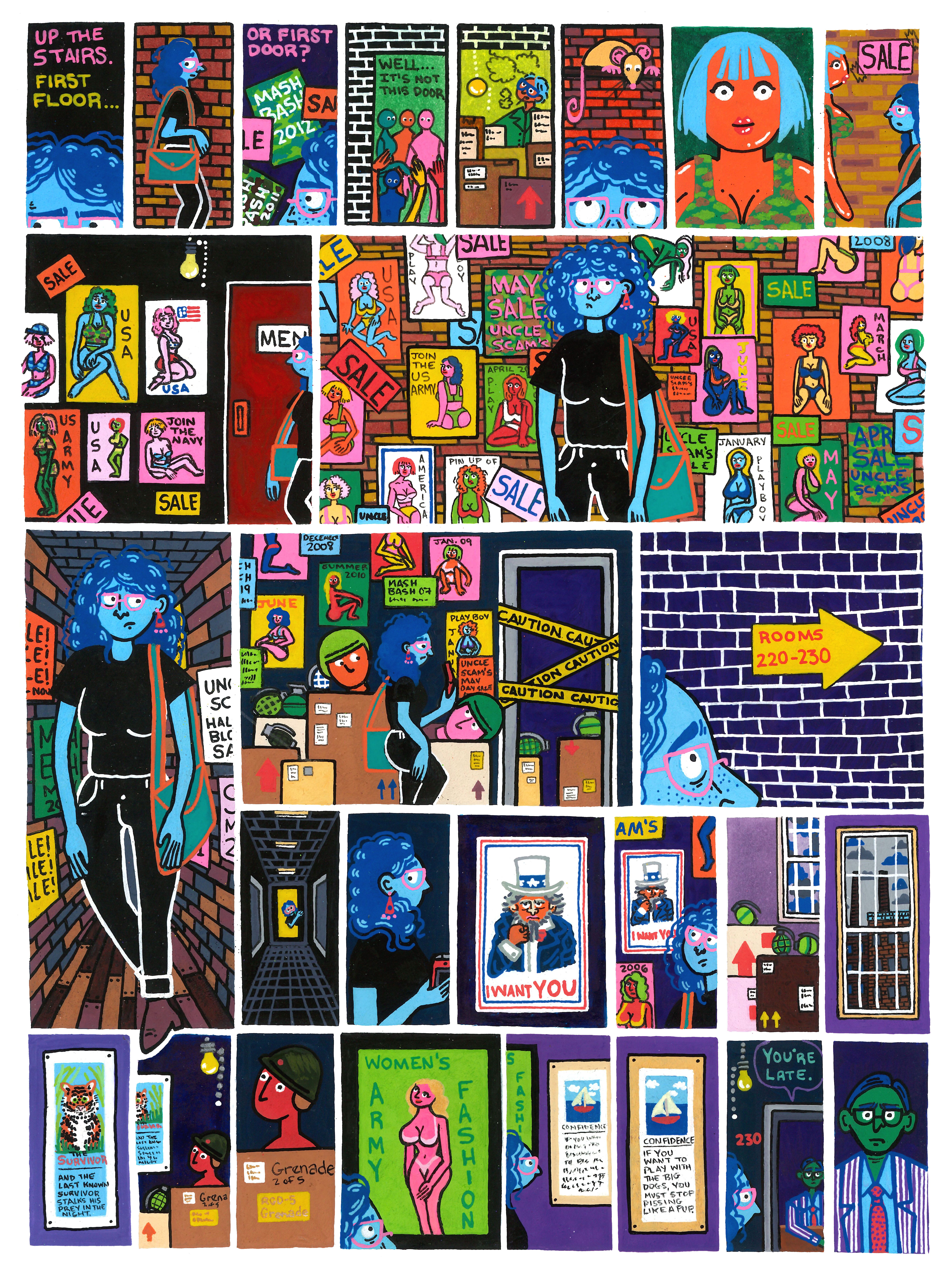
I met Graham Platner for the first time in 2010 at a house party on the deep West Side of Buffalo.
I should clarify that I don’t literally mean I have met Graham Platner, the oyster farmer running for Susan Collins’s congressional seat in Maine. When I say I have met Graham Platner, what I mean is that I have met Graham Platner clones at punk shows on Filmore Avenue, as baristas at cafes in Allentown and “The Elmwood Village,” and at crummy hole-in-the-wall DIY art openings at grimy dive bars. As has already been said in a viral essay on Substack: “Graham Platner is a type of guy.”
But what type of guy exactly, I guess, is the conundrum. The essay that I hyperlinked to above argues that Platner is a wanderer, an adventurer, and a philanderer. A man who is not a coward but also not an honest broker. The Totenkopf tattoo, which is also referenced in the piece (and it’s a great essay–you should read it), is an example of Platner’s “edginess” mixed with his dishonesty. Initially, Platner said that he didn’t know what the tattoo meant; later, the story was changed to he realized its symbolism only afterwards, then the story morphed into he would sometimes make fun of his “Nazi tattoo,” and then finally the story’s final form (the version published in the Times) changed to Platner openly bragging about his “Totenkopf” to women he was romantically intertwined with.
The saga of the modest blue-collar former Marine turned oyster farmer in Maine who is actually the child of elite intellectuals who went to one of the poshest private schools in the entire country and whose house was partially paid for, if not entirely (we will see if that story changes as well), by his parents is not a remarkable one. Platner is an archetype of a particular type of American man–the kind that gravitates towards the extreme ends of the political spectrum but has increasingly found a home in the ranks of the Democratic Socialists of America.
Graham Platners tend to be white guys–but also not always (as I have stated in prior essays there are not hard and fast rules about race dictating someone’s potential for being a dick). However, what they all have in common, at least from what I have observed in the wild, is a transgressive nature and a desire to be seen as the most edgy and interesting man in the room.
Additionally, Graham Platners are nine times out of ten red-blooded heterosexual men who enjoy sexual conquest. And while there is nothing wrong with men who are attracted to women pursuing consensual sexual relationships, Graham Platner types are normally not looking for long-term romantic partnerships. A Graham Platner is the type of man who brags about his sexual pursuits the same way a large game hunter will display the heads of boars or water buffalo he has killed on his lodge wall. The sex itself isn’t the prize–the boasting rights afterwards are.
Unlike Hasan Piker, who is another archetype of what can be considered a “toxic male,” Graham Platner was never a frat boy–i.e., a “bro,” which was a mainstream term thrown around in my 20s for a “normie” conventionally attractive dude who lived his life primarily in the mainstream. Think of Spencer Pratt, formally of “The Hills” fame, who is currently challenging Karen Bass in the 2026 Los Angeles mayoral race. Piker and Pratt are “bros,” but Platner is not–Platner is a hipster.
This distinction may seem superfluous and non-notable. After all, the “hipster” subculture died a slow, painful death at the hands of poptimism in 2016—the year that Beyonce released her album “Lemonade.” But before 2016, what was cool was to be an absolute asshole, and that included being the epic gatekeeper of one’s carefully curated musical taste.
I bought my first Björk album when I was 11. I was listening to “The Ongoing History of New Music” with Alan Cross by age 12. I stopped listening to mainstream pop radio at 13. I was ahead of my time when it came to absorbing all of the new indie rock music coming out of the UK at 14: the Kooks, the Libertines, Arctic Monkeys, Bloc Party, Editors…I can go on…But I won’t. But my larger point is one asshole from a dead subculture can spot another–and I can smell Graham Platner’s punk dive bar stench and vintage flannel shirts through my screen.
And I know what many are probably thinking: Graham Platner is a former Marine, not exactly the kind of guy that seems likely to sport a handlebar mustache, ride a fixie, or show up to an Animal Collective show. But as a recovering hipster myself, I can tell you there were more varieties of us than the caricatures showcased on Portlandia.
The hipster movement was marked by distinct aesthetic and cultural tastes, but it was also defined by a particular ethos: perform working-class authenticity while quietly despising the culture that created the genuine aesthetic and community. PBR was the unofficial beer of choice, and the “Three Wolf Moon” t-shirt may have became the trendiest fashion item, but hipsters were not working in coal mines or on factory floors–at least for the most part. The hipsters were mostly the spawn of an intellectual class that was always economically comfortable, who worked or aspired to work in creative white-collar fields.
So hipsters may have dressed and drank like blue-collar factory workers; however, their arrival in working-class bars and neighborhoods was often a reliable sign that everyone’s rent was about to increase. The working families that occupied the “authentic architecture” these new trendy urban interlopers enjoyed so much would be pushed out and replaced with 3000 dollar a month loft apartments, expensive art galleries, and record-store single-origin coffee shop hybrids. Think Fish Town in Philly, Capitol Hill in Seattle, Bushwick and Williamsburg in Brooklyn, or Silver Lake in LA. All of these places used to be working class, and now they are neighborhoods filled with Michelin-star restaurants and luxury apartments in plastic Lego block buildings that have usurped the original local culture. And for that, you can thank me and my friend Graham Platner for our service.
But what was a hipster before one was in fact a hipster? Probably not a question many people ponder–mostly because it’s stupid, but I’m going to answer it for you anyway.
For someone like me? One thing that distinguishes me from a Platner, as I have discussed in previous essays, is that I am from the kinds of “communities” many of these hipster types emulate; I did not have to cosplay or pretend that I know anything about working-class people–I literally went to school and had friends from the rough parts of town. Additionally, I have always been a giant music and art snob–this part of my personality didn’t change once the hipster movement was over; in fact, it may have gotten worse.
In addition, I still to this day wear the same black-framed glasses I have worn since high school. I still maintain a wardrobe that includes vintage skirts and dresses that I regularly wear, and I will commit Hari-kari before I sport a pair of Crocs or wear “atheliesure” as “fashion” outside of my boxing gym. Apologies–just had to get allllllll of that out of the way before I dive in to what most “proto-hipsters” were actually like–because they ain’t like me (just saying).
So, as I was asking before, prior to me over-explaining myself to all of you, who were hipsters before they were hipsters? Many were some flavor of punk. Why is this important, you may be asking, this is all so stupid–and I agree it is stupid, almost as stupid as someone like Graham Platner becoming the Democratic nominee in Maine…But if you have any desire at all to understand a Graham Platner, you must first grasp the flavor of punk rock and punk ethos that dominated the counterculture of the mid-2000s.
And one special website can explain this all to you–ladies and gentleman I give you: “Your Scene Sucks,” (you’re welcome). This website was created by artist Rob Dobi to showcase the “diversity” of countercultural music subcultures and movements. If I had to guess what character Graham Platner portrayed from his youth, my money is on “Up the Punx,” the description of which I have copied and pasted below:
“oi! this reject attempts to relive the spirit of ‘77 but, alas, was born in ‘91.
as a lover of music that revolves around the poor and working class, it only seems fitting that this street punk resides with his parents in their greenwich, ct mcmansion.
like most in his scene, he doesn’t know the first thing about politics aside from what his father brings to the dinner table. he has a strong stance against fascism, racism and sexism even though he has no idea what any of those terms truly mean. this punk firmly believes in anarchy, but this does not stop him from posting all day on the rupert-murdoch-owned myspace.com.
although his lifestyle may seem to embrace rebellion and individuality, the pseudo-punk spends plenty of time ensuring that his leather jacket is adorned with enough studs and patches to look just like those of his friends. he claims to be ambivalent about what anyone thinks of his looks, but he will go out of his way to put elmers glue and five cans of hairspray into his liberty spikes so they can stand as tall as possible.
when asked about his fashion, he will firmly attest that clothing does not define a punk. rather, the offbeat form of dress is simply a sign that encourages unity and deflects negative nuisances- which is, ironically, how everyone else views them.”
Graham Platner has, in fact, campaigned at punk shows. In February of this year, Platner—wearing a Bank of Palestine sports jersey—belted out the lyrics to “Bury the Bones” by the Dropkick Murphys before diving into the crowd. The Dropkick Murphys aren’t really a hipster band, but they’re the kind of starter band hipsters often pass through on their way to becoming insufferable. They played Warped Tour, appealed to suburban teenage music nerds, and somehow also managed to remain beloved by every third drunk guy in Boston.
Platner came out of the Bangor, Maine, punk scene of the mid-2000s, the same milieu that produced the critically acclaimed hardcore punk band Outbreak. He has said that the scene’s antifascist politics helped shape his own political outlook and that he grew up listening to bands such as the Pogues and the Dead Kennedys. Platner has even invoked his punk-rock past in explaining the immature Reddit posts he made in his mid-30s under the nom de plume “P-Hustle.” As Michelle Goldberg wrote in an October 2025 profile for the New York Times, “Many of Platner’s most controversial Reddit posts stem from this antifascist ethos.”
*So edgy! I will just state now…I prefer Refused (but only the album that has “New Noise”). Anyway moving on….
As I stated earlier, Platner is a scenester—a particular type of guy who, in a previous life, attended hardcore shows in abandoned houses and dive bars. And no, not all hipsters are punks and not all punks are hipsters; however, there has long been significant overlap and cross-pollination between the two communities, particularly during the birth of modern hipsterdom and the post-Y2K resurgence of DIY punk. Platner is five years older than I am, making him almost perfectly positioned to absorb both subcultures at exactly the moment they were bleeding into one another.
Platner also worked at the famous dive bar, the Tune Inn in Washington, D.C., during the height of the post-2011, PBR-soaked hipster era that followed its renovation after a devastating fire. Again, working at a dive bar in the early 2010s doesn’t make you a hipster, and correlation is not causation, I know, I know…However, dive bars like the Tune Inn didn’t get their trendy reputations out of nowhere; they were key third spaces for this specific subculture that came to dominate every other counter-cultural movement in its wake: one of the reasons hipsters became so hated later on.
Hipster culture at its core was built on inauthenticity–even if some of us (cough cough) weren’t faking our affinity for indie rock, flannel button-downs, and Ray-Ban eyeglasses. It was a way much like the upper middle class punk movement before it, (SLC Punk is available in full on YouTube: watch it) a performance of what it was like to be oppressed or poor for a specific subset of the population who had lived most of their life in relative comfort and abundance.
The other problem with these subcultures, and countercultural movements in general, is that non-conformity can be just as constraining as complying with the mainstream. You limit yourself in how you dress and what music you consume, to appeal and to signal allegiance to a specific subset of the population. And if you truly are a champion of the “working class” because you drink their beer and ironically wear their clothing, you eventually must signal your fake affinity with your voting patterns and political rhetoric.
Hipsters were millennials who were told that “we could be anything we wanted to be.” We were raised—mostly, though not universally—in environments that fostered our creative ambitions and treated a college education as the surest path to long-term stability. Few of us were taught that some degrees carry more economic weight than others, or that careers in the creative arts are, by their nature, precarious. We aspired to become musicians, fashion designers, DJs, and artists, and when those ambitions collided with reality, many of us became bitter. Looking back on my own generation, I often wonder how much of our newfound political zeal was genuine conviction and how much of it was disappointment searching for a more flattering vocabulary.
By 2016, the hipster movement had largely exhausted itself. Indie rock had given way to poptimism, Obama’s presidency was winding down, and the aesthetic rebellion that had once been expressed through music, fashion, and subculture began migrating into politics. The Bernie Bro was, in many ways, the hipster’s final form.
I knew Graham Platner was a Bernie Bro; I didn’t even have to Google it. And no, that’s not because Bernie Sanders eventually endorsed his congressional campaign. It’s because Bernie Sanders became the de facto political face of the subculture once Obama-era optimism wore off. Sanders echoed back to failed creative types in the scene exactly what they wanted to hear: that it wasn’t their fault that their creative dreams had failed, that the job at Vice Magazine hadn’t panned out, or that their micro batch Kombucha business had gone belly up–it was “the system’s.”
I knew Bernie Bros. I lived with one for a while: meticulously maintained facial hair, a closet full of vintage T-shirts, a record collection organized with near-religious devotion, and two vintage motorcycles that seemed to spend more time being discussed than ridden. He wasn’t literally Graham Platner, of course. But he belonged to the same species, and after a few months of sharing a roof with him, I began to suspect they all came off the same assembly line.
You can thank him for finally making me leave my hometown. To be fair, I’d been trying to escape Buffalo for years but could never quite summon the nerve to pull the trigger. Living with Graham Platner Number Two: or “P-Hustle 2,” as I’ll call him from here on out, provided the final shove out the door that I desperately needed.
P-Hustle 2 was an ex-musician and a product of the same predictable Millenial counter cultural currents that produced P-Hustle the former. He had the cred: the story about scabies he contracted while living in a punk house (practically mandatory), the tales about nights of hard partying and harder drug use while on tour with the band, and the obligatory terrible stick and poke tattoos that advertised his unwavering devotion to a carefully cultivated countercultural aesthetic.
P-Hustle 2’s musical tastes were “eclectic.” He liked bad music—but only ironically, unless you insulted his record collection, at which point he would start flipping coffee tables and accuse you of being a Philistine. I know because I once made fun of his prized Gloria Balsam record, one of the crown jewels of his collection. (How dare I)
P-Hustle 2 needed to be the coolest guy in the room: at the party, at the bar, at the record swap, everywhere. His music and his movies—much like my own, if I’m being honest—had supplanted his personality. One of the defining features of hipster culture was that taste became identity. Your records, your films, your coffee preferences, your dive bars, your obscure Japanese noise albums: these were not hobbies but moral virtues, evidence that you were more discerning, more authentic, and ultimately more interesting than everyone else.
Taste in hipster culture became a stand-in for morality itself. Liking the correct things—and, perhaps even more importantly, disliking the correct things—served as markers of cultural status. But there was one loophole: irony.
If you secretly enjoyed Chuck Norris movies, you didn’t have to admit that embarrassing fact. You simply liked Top Dog “ironically.” In hipster parlance, irony functioned as a kind of social indemnity. You could consume almost any piece of lowbrow culture so long as you made it abundantly clear that you were above it. The joke, of course, was that after enough ironic viewings, you often wound up sincerely liking the thing anyway.
Graham Platner’s Nazi tattoo fits in with this model as well. It is not the standard swastika or lightning bolts that would be easily recognized as belonging to the Third Reich; it is recognizable to those who know World War 2 history but obscure for those who do not. It is the tattoo equivalent of owning a Throbbing Gristle or Television record: an important cultural artifact for those in the know regarding the roots of industrial and punk music, but completely foreign to those who are out of the loop–it’s a social signifier. The ironic component of the tattoo is Platner’s nonchalant reaction to it: if he cared about it too much, he would be a neo-Nazi, but if he played it off like it was a funny image he got on a whim with the added effect that it pissed off the right people–those deemed politically “uncool” aka “Zionists” the symbolism works as intended.
Tattoos were practically a requirement in the hipster scene. I have none myself. I’m too Jewish—not in the religious sense, where tattoos are frowned upon, but in the “Do you have any idea how much that costs?” sense. They always struck me as exorbitantly priced eyesores I might spend the rest of my life regretting–although I was definitely into men with lots of tattoos, so I am not really sure how I square that circle…Nevertheless, tattoos were unavoidable, a defining feature of the subculture, and they came in endless varieties and aesthetic niches.
There were the do-it-yourselfers: those brave souls who endured stick and pokes, also known as prison tats–although those girls who got those “mustache” tattoos on their fingers also exist. There were the people who solely got sailor tats, the people who swore by the Japanese style, the new wave, the experimental, essentially, pick your aesthetic poison, and there was a tattoo for that. Once again, tattoos–ironic, obnoxious, or even offensive were a way of signifying your uniqueness: even if they were also a way of branding you and force-fitting yourself into a cultural box at the same time.
In addition, you could often identify a hipster simply by how they wore the same clothes as everyone else. A trucker hat, for instance, was perfectly acceptable—but only if the rest of your outfit signaled that you were in on the joke. Pair it with an obscure band T-shirt (Beach House was always a respectable choice), an NPR or New Yorker tote bag, sensible slip-on shoes, and the practically mandatory black skinny jeans, and everyone understood that the trucker hat was being worn ironically.
But venture too far from the approved uniform—swap the Beach House shirt for a Kid Rock tee or the Vans for a pair of actual steel-toed work boots—and you, my friend, were entering dangerous territory. You were no longer referencing the working class; you were in danger of being mistaken for a member of it. And that, in certain circles, was a far graver social offense.
P-Hustle 2 understood this instinct well—as did many of my friends who would later become enthusiastic members of the DSA. To me, the transition felt less like a political awakening than a migration from one status hierarchy to another. Hipster culture rewarded impeccable taste; activist culture rewarded impeccable politics. In both cases, the real currency wasn’t records or voting patterns but moral status—the reassurance that you belonged to the enlightened people and not to everyone else.
To be a hipster in the post 2016 era was to be a person immersed in woke politics. To know what words and phrases were no longer acceptable, what media one could consume and what to shun, and what politicians one could support and which ones must be sent to the gulags. Podcasts like Office Hours Live, which premiered on May 10th, 2016, replaced indie-rock sites like Paste and Pitchfork as the go-to media for new music recommendations and political tastes.
Office Hours Live it can be argued became the cultural focal point of disillusioned ex-hipsters desperately clinging to their past lives when they were “cool.” The podcast has a wide variety of guests, from comedians like Jack Black to indie rock musicians like Mac DeMarco and subversive political candidates like Graham fucking Platner. The audience profile leans heavily left-wing, male, and Millennial: or the exact type of guy or guy(s) that either vote for a Graham Platner type figure or want to be him.
These types of men are not authentic. P-Hustle 2, for instance, seemed to care more about his record collection than he did his own girlfriend. He later cheated on her with the bartender at my partner’s job, playing on the emotions of both women in what appeared to be a constant search for validation. The parallels with the real Graham Platner—the reports of him soliciting women on Kik less than a year after his marriage—are difficult for me to ignore.
What struck me about men like P-Hustle 2 was not simply their dishonesty but their habit of treating other people as props in an ongoing performance. Women became sources of affirmation, political opinions became social currency, and possessions became extensions of identity. Their personalities seemed less like something innate than something assembled from record collections, borrowed convictions, carefully curated aesthetics, and whoever happened to be admiring them that week.
P-Hustle 2 wasn’t the only Graham Platner clone I knew–he was just the one in closest proximity to me. There were other prototypes I would run in to at work, at art shows, and online. Some had ear gauges and looked more crust-punk-like, others preferred their buttoned up flannels and “Buddy Holly” glasses, and the most tragic looking specimens waxed their mustaches and wore fedoras. But regardless of the flavor of hipster, the modus operandi was always the same: impress upon the viewer how cool you are in order to insulate against any mockery of who you actually were on the inside.
Not to get all Judith Butler on all of you (and yes I still think She/They is a joke) but there was a performance of gender occuring during this process. A rehearsal of an accepted form of masculinity for the counter cultural crowd. Maleness was not expressed in fist fights (although we did have mosh pits) but in the ability to level a rival by humiliating them with your superior taste.
The real Graham Platner is a Marine, and that is not something I can simply ignore. P-Hustle 2 eventually became a machinist, another profession traditionally coded as masculine. I can’t meaningfully analyze either occupational culture from the inside—I don’t know them well enough. What I do know are subcultures: their rituals, their aesthetics, the emotional weight they carry, and the status games they produce.
Platner has attributed some of his online conduct toward fellow service members to PTSD. I don’t dismiss that explanation out of hand; I have PTSD myself and know firsthand that trauma can profoundly affect behavior. But mental illness does not erase agency, nor does it automatically explain patterns of cruelty that seem to extend beyond any single diagnosis.
One thing I do understand is the culture that surrounded me for years. Punk and adjacent counter cultural spaces often rewarded transgression for its own sake. Shock value carried status. Social boundaries existed to be crossed, taboos to be mocked, and ordinary decency could itself become a marker of bourgeois conformity. In that environment, cruelty could masquerade as irony, nihilism as sophistication, and emotional detachment as authenticity.
Do I think Graham Platner is a Nazi? No, no I don’t–but just like P-Hustle 2, just because you aren’t a Nazi, that doesn’t mean you can’t be an antisemite. Hipster antisemitism–was actually indeed a thing:
“- Israel’s influence in American politics is also exaggerated to outlandish extents. Ralph Nader, for example, recently characterized Bush and the congress as “puppets” of Ariel Sharon. Why the largest and most powerful empire in the history of the world would take orders from the small, albeit feisty, nation of Israel would seem to pose quite a conundrum -- unless one believes in the Protocols of the Elders of Zion or some watered-down contemporary alternative. When questioned, Nader claimed that he was only denouncing the influence of the American Israeli Political Action Committee, something commonly done in the pages of the New York Times. Nader’s statement was met with cheers from both his earnest progressive supporters and the neo-Nazis of the “National Stormfront.”
- Adbusters, a magazine popular amongst anti-capitalists, ran a list of prominent neo-conservatives with asterisks next to the names of the Jews. Why, oh why, the article asked, was it wrong to point out that the architects of the Bush administration’s Middle East policies were disproportionately Jewish? Of course, one might ask: Was there an accompanying list of anti-war leaders with asterisks next to the disproportionately high number of Jewish names? Nope.
- And recently, we walked into a bookstore in San Francisco and discovered a series of satiric anti-rightwing stickers (you know the ones, “Bush/Cheney, four more wars”) and found one that read “Palestinians out of Palestine, Jews for Genocide” implicating all Jews in a demonized Zionism. Of course it was supposed to be humorous overstatement. Ha, ha, ha. Unlike, say, witches or female to male transsexuals, Jews are now fair game in the uber-trendy Mission district. If these people are at the cutting edge of the culture, what is it that the culture is going to end up cutting?”
I would like to point out that the essay (Hipster Antisemitism) was published in 2004. It never gets old does it?
P-Hustle 2 used to “call bullshit” on my comments about being a Jew. “Why can’t you just say you’re Catholic? Or Greek or Italian?” He used to ask me. It wasn’t overt the way a neo-Nazi may mutter the slur “Kike” under his breathe–but it didn’t need to be, it was a form of minimizing any genuine concerns about antisemitism I may have had. Platner with his waving away of his Nazi tattoo, aided and abetted by the DSA’s response to those of us “bothered” by said tattoo are playing the same game. Platner just wants us to care about the “Genocide in Gaza” nevermind that he has praised Hamas, and the helmets and outfits of actual Nazi officers on Reddit–it’s all so ironic isn’t it?
Cenk Uygur, the uncle of Hasan Piker, is an avid defender of Graham Platner. Since the news broke about Platner’s alleged infidelity and possible issues with alcohol, Uygur has become a social media knight in shining armor for the Democratic Party’s congressional contender in Maine, decrying critics and stating that [Platner] is what “real people are like.” And while I abhor Uygur and think he represents some of the most reprehensible aspects of the left-leaning media ecosystem and can additionally be blamed for bestowing upon us his nephew’s “hot political takes” by giving him employment, aka “baby’s first media platform,” I don’t disagree with his assessment of Platner; Platner is what real people are like.
But that’s also kind of the problem.
Graham Platner is a kind of guy. The same kind of guy who bounces from subculture scene to subculture scene, morphing into a new version of himself with each transition.
So Platner is a real type of person: but I guess my question is, do we actually want this type of person to hold public office? Should an ex-hipster be allowed to become a congressman? Should a ex-hipster be allowed to own and operate a motor vehicle? I kid–I swear, but in all seriousness I think choosing someone for public office whose political beliefs are determined by the ebb and flow of cultural trends is a dangerous bargain, because how can you trust that what they are selling you is true?
The hipster movement has moved on–but I have stayed the same. That is how I know that I was never actually one of them. They were tourists who have transitioned to the next countercultural movement: radical politics. Platner, like P-Hustle 2 is a man of the times, an opportunist who goes where the cultural winds blow. But is that the kind of man we want representing our country? The kind who is only serious unless he’s being ironic, who only cares if it’s cool?
I’m not sure any country society or culture can withstand fucking around and finding out–because it may just lead to our demise.